Capabilities
The engineering capabilities behind a working system
This page is the technical detail behind what we do. If you are evaluating Silverbrook Technologies Ltd against other UK enterprise software partners, this is where you check whether the skills match the problem in front of you. Everything listed here is delivered by our own engineers from Birkenhead, working alongside your teams.
Delivery scope
Active- Engineers on this sheet
- own team, Birkenhead
- Platforms
- AWS · Azure · Google Cloud
- Stacks
- .NET · Java · Python · TypeScript
- Data
- PostgreSQL · SQL Server · Oracle
Today · legacy estate
Awaiting cutoverMonoliths, undocumented interfaces, quarterly releases
Systems of record that still run the business, with fragile change paths and no test safety net around the parts that matter most.
The corridor moves left to right in every act of this page. Down here it narrows through three stages before it hands over.
Target · cloud-native
Path clearBounded domains, API contracts, automated tests, elastic capacity, and a rollback position for every stage the corridor walks through.
What is moving first
Start by mapping the data model and integration points you already depend on — not by choosing a framework.
Then wrap the stable interface in an API layer so the old system keeps operating while new work lands beside it.
Finally migrate one bounded domain at a time, retiring the old path only after traffic has genuinely moved across.
Modernisation in three stages
Legacy work only fails when it is run as one enormous project
We break it into stages that each deliver something usable: expose the data, wrap the interface, migrate a bounded domain, then retire the old path once traffic has moved. The organisation keeps operating throughout, and each stage has a rollback position if it does not go to plan.
First move
An assessment that reads the data model, integration points and change safety net before anything is touched. We map the undocumented internal APIs first, because integration built on assumptions fails quietly and expensively.
Second move
Expose the stable data behind an API layer, wrap the interface in versioned contracts, and unpick tangled business logic behind a full test suite so the boundary stays where it belongs.
Final move
Traffic moves domain by domain, the old path is retired once it is genuinely quiet, and the operating team owns the documentation and the runbooks that go with it.
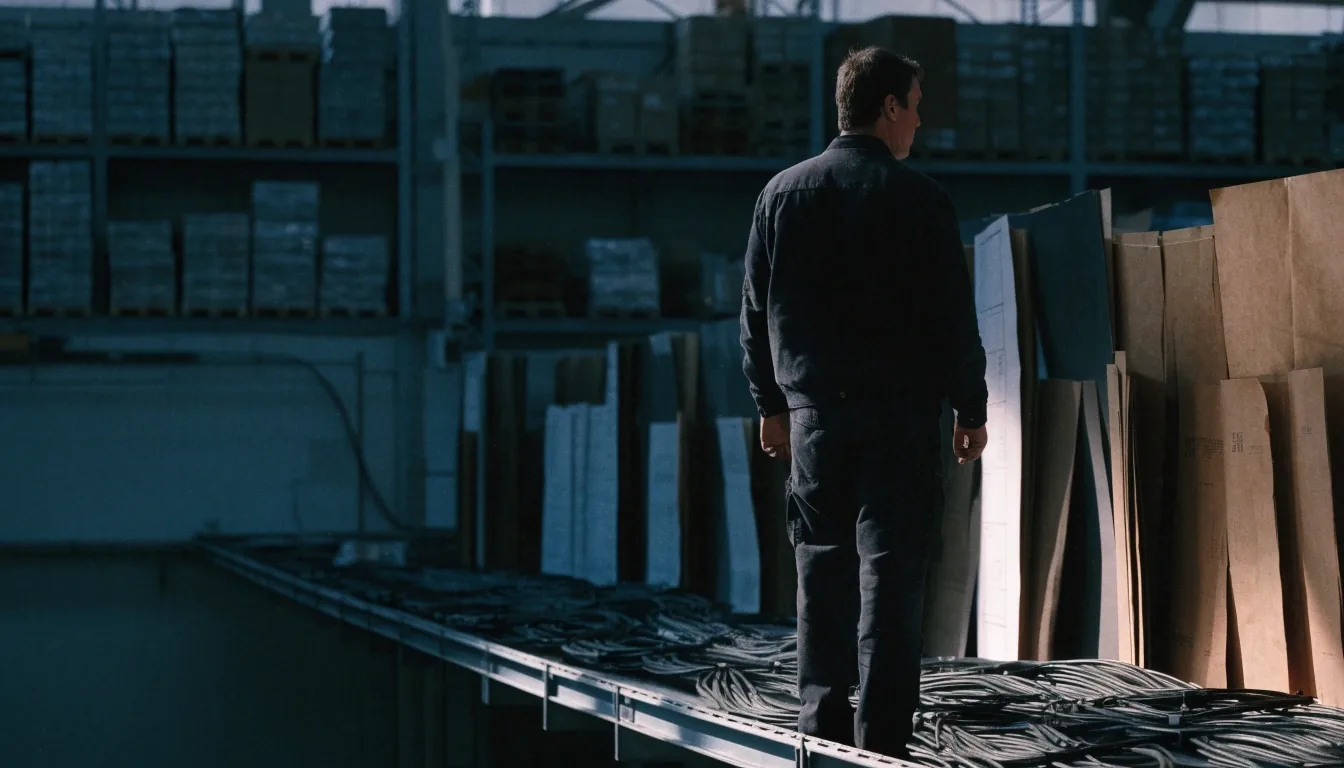
The delivery floor · Birkenhead
Every capability on this page is delivered by engineers in this room — a workstation inside a working floor, not a hand-off to a partner network.
We replace
StatementWe replace, we do not repaint.
A new wrapper around the same broken process is not modernisation. Work is delivered by our own engineers, not reassigned to another firm.
What the work includes
-
Delivery cadence measured in weeks
Work is scoped, cut, and shipped in stages — each one releases something usable, and each one carries a rollback position if it does not land.
-
Every environment you run against
Containerisation, infrastructure as code, CI/CD pipelines, environment parity, secrets management, and monitoring are part of the build, not a later project.
-
Contracts written before the code is
REST and GraphQL interfaces carry versioning, authentication, rate limiting and error contracts specified up front — so integration does not fail quietly six months down the line.
Where the drag lives
Every sector carries its own pinch point on the corridor
The pinch point below is where legacy drag tends to persist in that sector — the place where a migration stalls unless a specific part of the estate is unpicked first. Which capability from this page resolves it is what the assessment stage works out.
Stalls on audit-friendly access to legacy systems of record — data must remain traceable and immutable through every stage of the move.
Stalls on the boundary between clinical systems and back-office reporting — the two have to sit in the same flow without letting one slow the other.
Stalls on shop-floor systems that cannot afford downtime — latency, batch windows and offline fallbacks have to be designed before anything moves.
Stalls on data shared across multiple agencies — reconciliation logic has to keep every party's numbers honest while the systems underneath change.
The right capability is the one the system actually needs.
Next step
Not every project needs every capability
A focused API build might use three of the capabilities above; a multi-year transformation might touch all of them over time. The assessment stage works out which parts actually apply to your situation — and which are noise.
We are an engineering-led company, not a management consultancy. Where a problem is genuinely a strategy question rather than a build question, we will say so and point you toward the right kind of firm.
- Bespoke software
- Web applications, back-office systems, data pipelines and internal tools — built from your data model and integration points, not from a framework preference.
- Cloud-native engineering
- Elastic capacity, managed services, containers, infrastructure as code and observability as part of the build. Hybrid estates stay hybrid where they need to.
- DevOps consulting
- CI/CD pipelines, environment parity, release automation, secrets management and the monitoring that tells you whether a deployment actually worked.
- API development
- REST and GraphQL interfaces with versioning, authentication, rate limiting and error contracts specified up front. Undocumented internals are mapped before they are touched.
- System integration
- Message queues, event streams, batch interfaces and reconciliation logic that keeps data honest across third-party platforms and legacy systems of record.
- Data engineering
- Pipelines, warehouses and reporting layers with lineage and quality checks. Analytics workloads stay separate from transactional ones so reporting never slows the systems that run the business.
- Quality engineering
- Automated test suites around the parts that carry risk, exploratory testing around the parts that are hard to automate, and a safety net built before any legacy change is made.
Talk to an engineer
Take a technical brief straight to the team in Birkenhead. Email or call with the shape of the problem — the assessment stage is where the right capability gets chosen.
- [email protected]
- +44 20 7474 1143
- Monday to Friday, 9:00 AM – 6:00 PM
Studio
The Turbine Business CentreTurbine Road, Birkenhead
Merseyside, CH41 9BA
England
Elsewhere on the site