
Our approach
How we deliver software that survives its first year
Delivery methodology sounds abstract until a project goes wrong. What follows is how we handle the failure modes we keep seeing in enterprise software — unclear scope, hidden technical debt, integration surprises, and handovers that leave the client unable to move.
A written assessment, not a sales document
Every engagement starts with a technical assessment of the current estate: the systems in scope, the risks we can see, and a view on what should be done first. Parts of it will sometimes say a proposed project should not go ahead as scoped. That is the point — you can take it to a board, an architecture review, or a competing supplier, and it still holds up.
A release you can actually accept
We agree what the first release has to do, what is explicitly out of scope, and the criteria used to accept it. That makes the first phase finite, even when the wider programme runs for years.
Discovery, architecture, secure engineering, and support — the same corridor runs the full length of the engagement.
What moves in the corridor
-
The assessment covers the estate you already run — including the parts that were never documented.
-
Scope is agreed in writing: what ships first, what waits, and what is deliberately left out.
-
The same engineers carry the system from first commit through to long-term support.
Not every leg of the corridor is the same width. Discovery is verbal and fast. Architecture is drawn and reviewed. Secure engineering runs the whole way through. Support stays after delivery, narrower and slower.
Modernisation in three stages
The corridor narrows as the work gets decided
Three stages, three widths. Each one ends when the next one can start without guessing. The corridor drawn above continues in the drawings below, narrowing as the risk comes off the table.
Architecture before code
The cheapest time to fix an architecture decision is before it is implemented. We produce an architecture document early, covering system boundaries, data flow, integration points, deployment model, and the trade-offs behind each choice. It is written to be read by your engineers, not to be filed. Where your existing architecture constrains the design, that constraint is recorded rather than ignored.
Secure engineering, throughout
Security work spreads through delivery rather than being bolted on at the end. Threat modelling happens during design. Dependency and vulnerability scanning run in the pipeline. Secrets are managed properly from the first commit. Access control and audit logging are treated as requirements of the system, not as a policy PDF. This is not a compliance checkbox; it is what stops a routine integration from becoming an incident.
Handover, documented for the day it happens
Our engineers work alongside client teams, in your tools and your ceremonies where that helps. For organisations without in-house engineers on the project, we provide the full team and document for the day it hands back. Either way, knowledge transfer is planned rather than improvised at the end, and the codebase is written on the assumption that someone else will eventually maintain it.
The room the work happens in
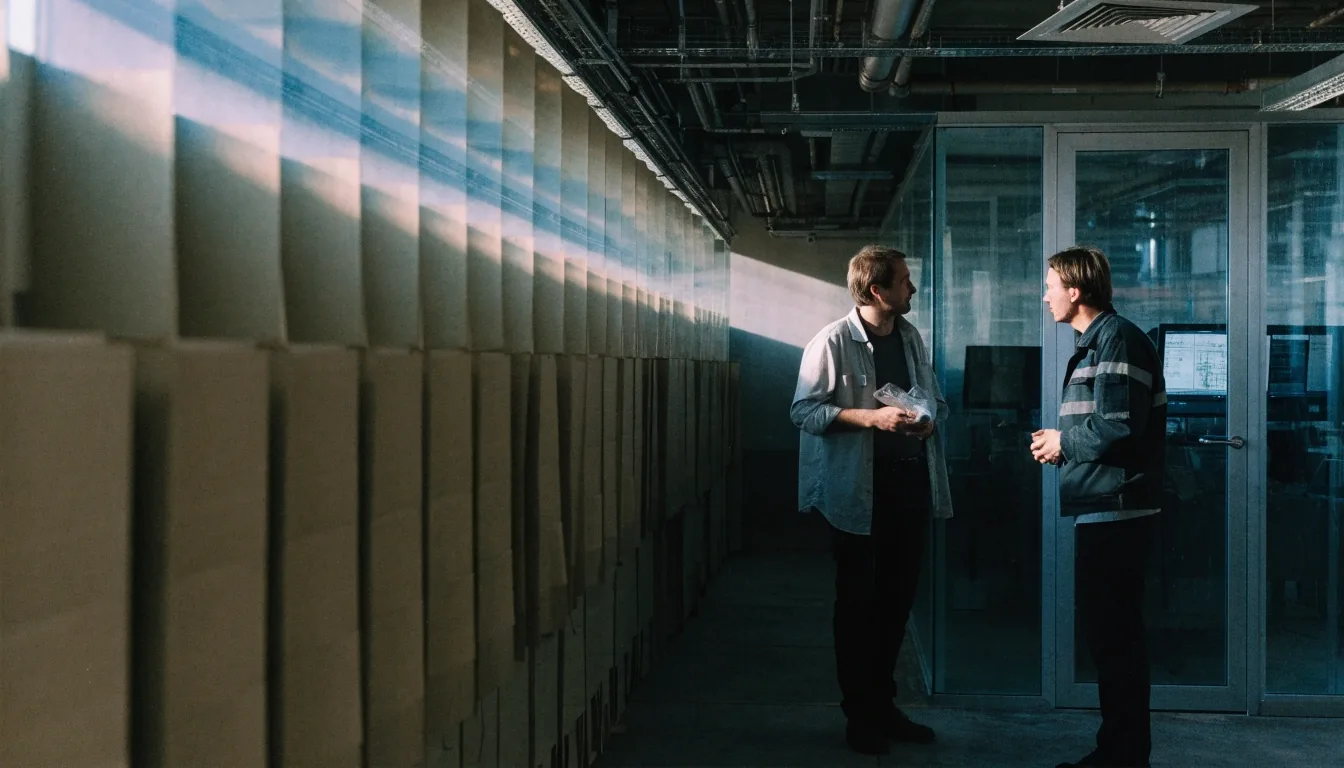
The assessment, the architecture document, the pipeline, and the on-call rotation all sit in one room — which is why the cadence holds when the corridor narrows.
We replace. We do not repaint.
Digital transformation that leaves the legacy core untouched is a coat of paint. We work on the system itself — the parts that decide whether the business can change its own mind next year.
Bespoke software engineering. Systems built around how your organisation actually works, not the shape of an off-the-shelf product.
Replaces the bolt-onLegacy modernisation. Staged cutovers with a written architecture, so the old system keeps running until the new one has proven itself.
Cutover, not big bangSecure, scalable architecture. Access control, secrets handling, and audit logging designed in as requirements, so growth does not open new holes.
Designed, not patchedThe page you are reading explains how those three are delivered together. The commercial shape of an engagement is on the capabilities page.
Where legacy drag persists
Four sectors, four corridors, four different places the drag lives
The point where the corridor breaks is the point where the sector carries the most unresolved dependency. Naming it honestly is what makes a staged engagement go faster, not slower.
The break sits where platform replacement decisions stall against retained audit and reporting history, so we stage cutovers around that timeline rather than through it.
The break sits where interoperability work meets clinical sign-off — we sequence integration behind a real clinical gate instead of promising a date the governance cannot hold.
The break sits where ERP, MES, and PLC integration cannot tolerate downtime at all — so the replacements are cut over window by window, with rollback rehearsed before it is needed.
The break sits where framework governance lengthens the road between sign-off and first commit — so the assessment lands before procurement starts, and the shape of the work is agreed early.
The working relationship
What we ask, how we measure, when to stop
The engagement is a working relationship, not a reporting exercise. Three questions decide how most of them go.
What we ask of clients
A decision-maker who can resolve conflicting requirements, access to the people who actually run the systems, and a willingness to review working software rather than documents. Projects struggle when the only contact is a procurement team. They move when someone with authority is in the room at the right moments.
How we measure progress
Progress is measured in working software, tests passing, and risks retired. Where a programme has board-level reporting requirements, we map our increments to those categories so the reporting and the reality stay connected. If the metrics and the delivery are pulling in different directions, the metrics are wrong.
When a project should stop
Some programmes should be stopped: the case has changed, the system is being replaced by a platform, or the cost has outgrown the benefit. We would rather say so early than bill through a conclusion everyone can already see. Ending a project well is part of the methodology, not a failure of it.
Increments and support
Something demonstrable every couple of weeks
Work is delivered in short increments with working software at the end of each one. Feedback can change direction before a mistake becomes expensive — for organisations used to milestone-based reporting, the rhythm takes a phase to adjust to, but the visibility usually ends the argument about status.
Technical debt, named
Each increment includes time for refactoring, test coverage, and documentation, in proportion to the risk being carried. Where existing debt affects our work, we log it and either address it or make it a visible decision.
Support with a named team
Dependency upgrades, security patches, performance tuning, and the small changes that keep a platform aligned with the business — handled under a support arrangement with defined response expectations, not a general helpdesk. The same engineers usually stay on the rotation.
The whole point
Software your team can still run without us
Not a pitch. A design constraint we build every handover around.
Begin the corridor
Start with the assessment
The first stage of every engagement is a written technical assessment of your current estate — the systems in scope, the risks we can see, and a view on what should be done first.
- Studio
- The Turbine Business Centre,
Turbine Road, Birkenhead,
Merseyside, CH41 9BA, England
Working hours: Monday to Friday, 9:00 AM – 6:00 PM. The assessment usually takes one to two weeks to schedule and complete, depending on access to the systems in scope.